


SCHOOLBOY RUNAWAY - STEALTH
3.94.51K Reviews
App Specs
- Version
- 1.05
- Updated On
- License
- Free
- Downloads
- 50,000,000+
- Developer
- Linked Squad
- Categories
- Arcade
- Platform
- Android, iOS
Screenshots


 Analysis by AppCompare
When I pick a stealth game for a short break, I want a clear goal and a reason to think before I move, not a complicated control scheme that takes half the session to learn. Schoolboy Runaway - Stealth is built around the pleasure of slipping through a risky situation without being noticed. Its central appeal is simple to understand: a boy wants to get out, and the challenge is working out how to move without drawing attention. That focus gives the game a more deliberate rhythm than an arcade title based only on speed.
That distinction matters when choosing what to play. A conventional runner usually rewards quick reactions and continuous forward motion; a stealth game asks me to pause, read what is happening, and choose when to act. I find that change of pace refreshing when I have a few minutes but do not want another reflex test. It also means the game is not automatically the best fit for someone who wants instant action or a generous stream of spectacle. Its appeal depends on enjoying the small tension of deciding whether this is the right moment to move.
A small escape built around timing
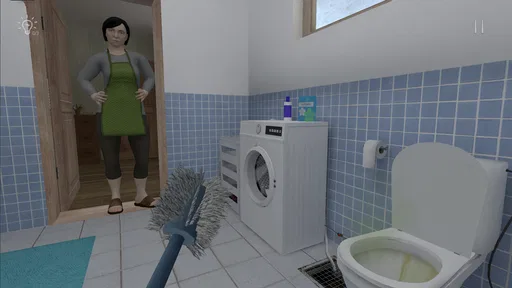
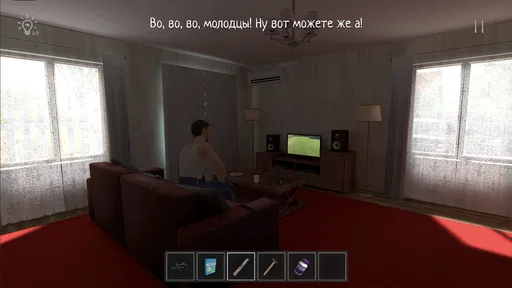
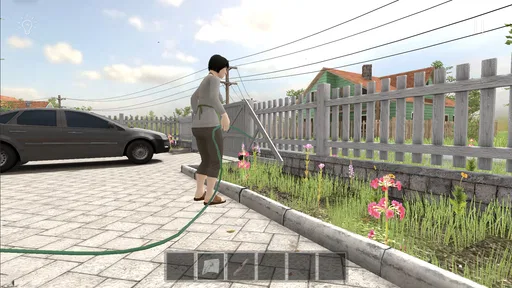
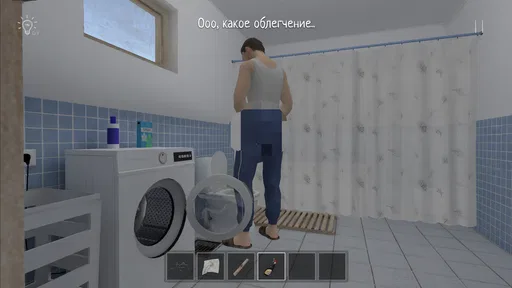
The premise gives that decision-making a playful frame. Dad does not want the boy to go out, so the player tries to outwit his parents and make an escape. I like that this is a domestic problem rather than a grand fantasy mission: the stakes are easy to grasp, and the humor comes from treating an everyday disagreement like a stealth operation. The setup also keeps the goal personal and focused, instead of asking me to follow a long story before I can understand why I am moving.
As an arcade game from Linked Squad, it aims for an accessible loop rather than a sprawling simulation. That is useful for newcomers: I do not need to arrive with a history of stealth games to understand the basic appeal. The practical question is whether I enjoy cautious movement and trial-and-error. If I do, the premise gives those choices a clear purpose; if I would rather sprint through a level and react on instinct, the quieter approach may feel slow.
How I would approach a play session
I treat each attempt as a chance to observe before committing. In a stealth challenge, rushing because the exit is visible can be less effective than taking a moment to consider what might expose the route. That is a useful habit here: I would rather make one deliberate move, notice the result, and adjust than turn every attempt into a frantic dash. The central skill is not just moving carefully; it is managing impatience.
For a realistic everyday session, imagine waiting for a kettle to boil or taking a short break between tasks. I would start a run, get a feel for the immediate situation, and decide whether I have enough attention for another attempt. If I am interrupted, stealth’s stop-and-think rhythm is easier to return to than a game that depends on maintaining a long chain of rapid inputs. The trade-off is that a tense moment can still be a poor match for a distracted setting: if I keep glancing away, I may miss the cue that should inform my next move.
A practical tip is to separate learning from winning. On an early attempt, I would focus on noticing what seems to make a route risky instead of treating every setback as wasted time. Then I could use that observation on a later try. This approach makes repetition feel purposeful, even when I have not yet reached the goal, and it suits a game whose pleasure comes from figuring out how to get past a problem rather than simply pressing ahead.
Worth Reading Before You Choose

Baby Panda World Brings Quick Play to Modern Phones, but Its Game Library Feels Busy

ESPN’s Live Game View Makes Following Close Games Easier

QuizzLand Review: A Good Fit for Short Trivia Breaks, Not Every Player

Basketball Stars: Multiplayer Is Fast, but Can It Recover When Matches Go Wrong?

WEBTOON Turns Phone Updates Into a Better Reading Routine

Link to Windows Runs on Shared Habits, Not Social Feeds
The Thrill of the Chase
In Schoolboy Runaway - Stealth, you step into the shoes of a mischievous schoolboy who's had enough of the monotonous school routine. Your mission, should you choose to accept it, is to escape from your school without getting caught by the vigilant teachers and security guards. Sounds simple, right? But trust me, it’s anything but!
The game is all about strategy and timing. You’ll find yourself crouching behind desks, sneaking through corridors, and making a mad dash for the exit when the coast is clear. The graphics are charmingly cartoonish, adding a light-hearted vibe to the otherwise tense gameplay. And the sound effects? Top-notch! The sound of footsteps approaching will have you on the edge of your seat.
Intuitive Controls
The controls in Schoolboy Runaway - Stealth are intuitive and easy to master. You have a virtual joystick for movement and a couple of buttons for actions like crouching and sprinting. This setup makes it perfect for casual gamers and those who may not be too familiar with complex controls. It’s all about keeping it simple yet effective.
One thing I particularly loved was the way the game gradually ramps up the difficulty. Just when you think you’ve got it all figured out, the game throws in new challenges, like more guards or additional obstacles. It keeps you on your toes and makes every escape attempt feel fresh and exciting.
Thinking before the next attempt
That accessible control layout is most useful when I want to spend my attention on timing rather than remembering a complicated set of inputs. I would still avoid treating the controls as a promise that every attempt will feel effortless: simple controls do not remove the need to judge when to move. If I am new to stealth games, I would give myself a little room to learn the relationship between cautious movement and risk instead of expecting to succeed immediately.
When a run goes wrong, I would change one decision at a time. For example, I might wait longer before crossing a risky stretch, or choose a different moment to make a quick move, rather than altering my whole approach at once. That makes it easier to understand what helped. It is a small but useful way to keep the game from becoming a series of arbitrary retries, especially for players who like to improve through observation.
The gradual increase in challenge can also cut both ways. It gives returning players a reason to stay alert, but a player who only wants a relaxed distraction may find the rising pressure less comfortable. I would recommend it to someone who enjoys a manageable learning curve and can accept a few failed attempts; I would steer a player seeking a completely carefree, consequence-free arcade session toward something less dependent on stealth decisions.
Levels and Challenges
The game is structured into multiple levels, each with its own unique challenges and environments. From the classroom to the playground, each level is meticulously designed to test your stealth skills. And if you’re anything like me, you’ll find yourself replaying levels to beat your previous time or to find more efficient escape routes.
There are also various achievements to unlock, which adds another layer of replayability. Whether it’s sneaking past all guards without being seen or collecting hidden items, there’s plenty to keep you coming back for more.
Where this arcade game fits
Compared with the usual arcade alternatives, this one puts more value on restraint than on constant motion. A standard endless runner is often the better pick when I want to react quickly and let the pace carry me; a puzzle game is a better choice when I want to stop and reason without the same sense of being watched. Here, the pleasure sits between those moods: I can think through a route, but the escape premise keeps the decision tied to movement and risk.
That makes it a particularly good option for players who enjoy replaying a level to make a cleaner attempt. The useful question is not only whether I can finish, but whether I can learn to move more efficiently. If I do not care about refining a route or repeating a challenge, the game may have less staying power for me than an arcade title with more varied moment-to-moment action. Its focused design is a strength when I want stealth, and a limitation when I want variety above all else.
The same focus helps explain who should skip it. Players looking for a competitive multiplayer match, a deep narrative, or a broad collection of unrelated modes may be happier elsewhere; I would not choose this as a substitute for those experiences. Likewise, if being caught or needing another attempt quickly becomes frustrating, a forgiving puzzle game may be a better fit. This is most satisfying when I can enjoy careful progress even before I reach the exit.
It is free to play, and its Teen content rating gives families a useful starting point when deciding whether the tone suits a younger player. I would still make that choice based on the individual and the game’s presentation rather than treating an age label as a substitute for judgment. On the technical side, version 1.03 supports Android 5.1 and later, which makes it accessible to people using a range of Android devices. It is also a substantial game in terms of its audience: it has passed 50 million installs, with an average rating of 4.0 from around 472,000 ratings. Those figures suggest broad interest, but they do not tell me whether its deliberate stealth pace will suit a particular player.
Who gets the most from the stealth loop
I would point first to players who like low-pressure planning with a little tension attached. It works best for someone who enjoys noticing a hazard, waiting for a better opportunity, and trying a different route after a setback. The appeal is not limited to experienced stealth fans: a newcomer can understand the basic idea quickly, while a more patient player can find satisfaction in making each attempt more considered.
It also makes sense for someone who wants a game that can be approached in short bursts, as long as they are willing to give each attempt their attention. A few focused minutes can be more rewarding than a long session spent rushing without thinking. If I know I will be interrupted every few seconds, though, I would choose a less tense game; the fact that the controls are approachable does not mean the decisions are unimportant.
Before downloading, the questions I would ask myself are straightforward: Do I enjoy stealth more than pure speed? Am I comfortable repeating a challenge to learn from it? Do I want a focused escape premise, rather than a story-heavy adventure or a competitive game? If the answers are yes, this is an easy concept to try without paying upfront. If I mainly want variety, a long-form narrative, or immediate action, I would look at another arcade or puzzle option instead.
Final Thoughts
Overall, Schoolboy Runaway - Stealth is a charming and engaging game that offers a perfect mix of fun and challenge. It’s ideal for those looking to kill some time or for anyone who enjoys a good stealth game. The app runs smoothly on both Android and iOS, and I didn’t encounter any bugs during my time with it.
If you’re in the mood for some sneaky escapades, I highly recommend giving this game a try. Just remember, patience and timing are key. Happy sneaking!
Pros
- Engaging stealth mechanics enhance gameplay.
- Visually appealing graphics with smooth animations.
- Intuitive controls suitable for all ages.
- Challenging levels keep players hooked.
- Regular updates with new content and features.
Cons
- Occasional in-game ad interruptions.
- Limited character customization options.
- Some levels are overly difficult.
- Requires constant internet connection.
- In-app purchases can be costly.
FAQs for SCHOOLBOY RUNAWAY - STEALTH
What is the main objective of Schoolboy Runaway - Stealth?
Schoolboy Runaway - Stealth challenges players to navigate through various levels, avoiding detection by teachers and other authority figures. The main objective is to use stealth tactics to escape the school grounds without getting caught. It requires strategic planning, quick thinking, and a keen sense of timing.
What age group is Schoolboy Runaway - Stealth suitable for?
The game is designed for players aged 10 and up. It features cartoonish graphics and a playful storyline that appeals to both younger audiences and older players who enjoy stealth-based challenges. Parents can feel comfortable with the game's content, as it is free from explicit material.
What are the key features of Schoolboy Runaway - Stealth?
Key features include multiple levels with increasing difficulty, a variety of disguises and gadgets to aid in stealth, and an engaging storyline that unfolds as you progress. The game also offers achievements and leaderboards to encourage replayability and competition among friends.
Does Schoolboy Runaway - Stealth require an internet connection?
The game can be played offline, making it ideal for use in situations where internet access is limited or unavailable. However, an internet connection is required to access leaderboards, updates, and any downloadable content that may be released in the future.
Are there in-app purchases in Schoolboy Runaway - Stealth?
Yes, the game offers optional in-app purchases. These may include additional gadgets, costumes, or level packs that enhance the gameplay experience. While these can provide an advantage or add variety, they are not necessary to complete the game, allowing players to enjoy it fully without spending extra money.


